
Reducing Chargeback Cost Exposure: A Layered Tooling Approach
Posted on Jan 15, 2026Aengus Neary | 8 minute read
Chargebacks are rarely the result of a single failure. They emerge when fraud prevention, customer experience, fulfilment, and dispute operations fall out of alignment. As a result, the most effective way to reduce chargeback-related cost is not to optimise one tool or process, but to deploy a layered approach that addresses risk across the full transaction lifecycle.
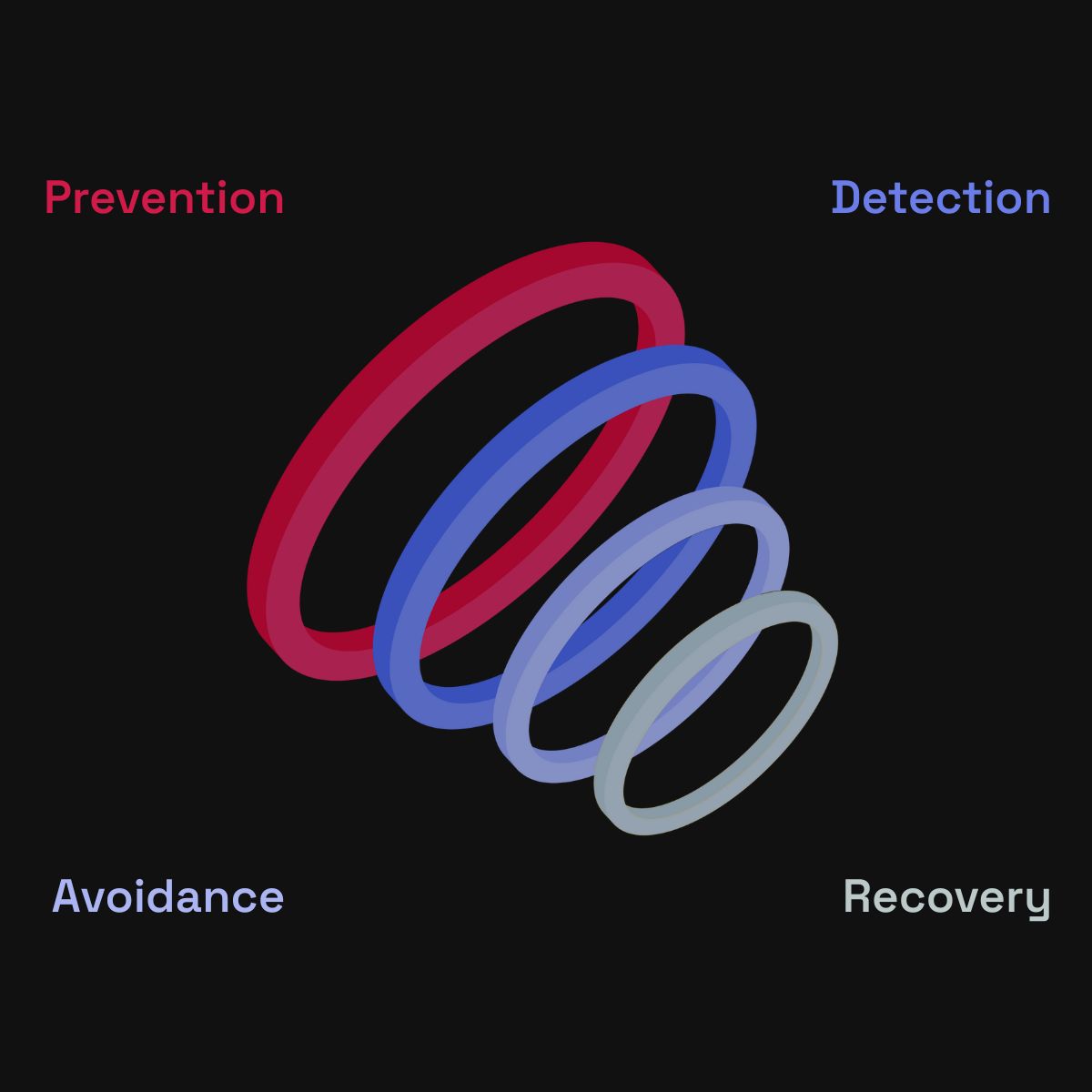
This approach can be understood across four stages: prevention, detection, avoidance, and recovery. Each stage addresses a different cost driver and plays a distinct role in reducing overall exposure.
1. Prevention: Stopping high-risk payments before authorisation
Prevention is the most cost-effective point at which to address fraud, as transactions stopped before authorisation avoid downstream fees, operational effort, and scheme exposure entirely. However, effective prevention depends on decision quality, not simply rejection volume.
In practice, prevention decisions are made using a combination of merchant-defined rules and risk models. Rather than replacing these systems, effective fraud platforms enrich them with high-signal inputs that improve accuracy and adaptability.
Typical prevention signals include:
- Customer behavioural indicators, e.g. payment velocity
- Fraud risk scoring to indicate the likelihood of fraudulent behaviour
- Identity verification signals that assess the consistency and legitimacy of customer identity
- Online identity and device intelligence to identify abnormal or reused patterns across sessions and accounts
These signals are consumed by the merchant’s existing rules, models, or orchestration layer, allowing prevention strategies to be tuned by channel, geography, and risk appetite.
Trade-offs remain unavoidable:
- Overly aggressive thresholds increase false declines and suppress conversion
- Weak prevention shifts cost downstream, where it becomes more expensive to manage
- Prevention systems must be continuously tuned using dispute and fraud outcomes, not set once and forgotten.
The role of prevention tooling is therefore not to make binary decisions in isolation, but to enable merchants to intervene earlier with greater precision, using their own policies and controls.
Cost impact:
Effective prevention reduces fraud-driven chargebacks at the source, lowering scheme exposure, dispute fees, and operational burden. A cost-effective strategy balances sufficient prevention controls with focused avoidance and recovery to maximise revenue while handling fraud economically.
2. Detection: Identifying fraud that bypasses prevention
No prevention strategy is perfect. Detection focuses on identifying elevated risk after authorisation but before disputes materialise, creating an opportunity for earlier, lower-cost intervention.
Detection is typically driven by post-transaction signals rather than decisioning. These signals highlight behavioural, identity, or usage patterns that deviate from expected customer behaviour over time.
Common detection signals include:
- Behavioural anomalies across sessions or accounts
- Indicators of account takeover or credential misuse
- Inconsistencies between identity, device, and usage patterns
- Changes in risk profile following authorisation
These signals are surfaced to the merchant’s existing operational workflows, enabling targeted actions such as fulfilment review, account step-up, or controlled refunds where appropriate.
The effectiveness of detection is time-sensitive. As delays increase, recovery options narrow and costs shift downstream into disputes and scheme reporting.
The role of detection tooling is therefore to prioritise attention, not to introduce blanket manual review or replace merchant-defined processes.
3. Avoidance: Preventing disputes from becoming chargebacks
Not all disputes are fraud-related. A significant proportion arise from customer confusion, unrecognised merchant descriptors, or fulfilment-related questions. Avoidance tools aim to address these scenarios before a dispute is formalised as a chargeback.
Avoidance capabilities generally fall into two complementary categories:
Issuer-facing transaction clarity tools, such as Verifi Order Insights (+ Compelling Evidence) and Ethoca Consumer Clarity (+ Mastercard First Party Trust) , provide enriched transaction and order information directly to issuers and cardholders. By improving transaction recognition at the point of enquiry, these tools reduce unnecessary disputes at their source.
Pre-dispute alert and resolution mechanisms, including Verifi RDR / CDRN and Ethoca Alerts, notify merchants when a cardholder initiates a dispute with their issuer. This creates a short window in which merchants can refund the transaction or provide clarification, preventing the dispute from progressing to a chargeback.
Each approach addresses a different stage of the dispute journey. Clarity tools reduce dispute initiation, while alerting mechanisms reduce dispute escalation. When combined, they provide broader coverage across customer-driven dispute scenarios.
Triggering avoidance solutions on dispute segments that a merchant does not want to defend is a cost-effective approach that also balances customer experience with chargeback ratios.
Cost impact:
Avoidance eliminates chargeback fees, defence costs, and scheme reporting impact for eligible disputes, making it one of the highest-ROI layers when operationally executed well.
4. Recovery: Defending unavoidable chargebacks efficiently
Even with strong prevention and avoidance in place, some chargebacks are unavoidable. Recovery focuses on maximising net economic return while minimising operational effort and escalation risk.
Effective recovery is selective, not exhaustive. Fraud-related chargebacks, in particular, often have low win rates (less than 20%) without strong authentication or verification signals. Defending every dispute by default can therefore increase cost without improving outcomes.
Recovery tooling supports disciplined decision-making by:
- Structuring disputes by reason code, value, and likely outcome
- Ensuring evidence requirements are met consistently and on time
- Reducing manual effort through evidence assembly and workflow coordination
Rather than changing the underlying economics of dispute resolution, the role of recovery tooling is to prevent wasted effort, focus resources where recovery is viable, and avoid unnecessary escalation within scheme programmes.
Bringing the layers together
The four stages work best as a coordinated system or platform rather than independent tools:
- Prevention reduces volume.
- Detection limits exposure when prevention fails.
- Avoidance deflects customer-driven disputes and reduces the likelihood of a dispute becoming a cost-bearing chargeback.
- Recovery ensures unavoidable disputes are handled economically.
Merchants that over-invest in recovery while under-investing in prevention typically see rising costs with diminishing returns. Conversely, merchants that rely solely on prevention often struggle with customer-driven disputes and operational friction or even increased good-customer friction.
Key takeaway
Reducing chargeback cost exposure is not about eliminating disputes entirely, but about controlling where and how cost is incurred.
By applying the right tooling at each stage of the transaction lifecycle, merchants can:
- Shift cost upstream where it is more cost-effective to manage
- Reduce scheme and acquirer risk exposure
- Improve operational efficiency
- Protect approval rates and long-term revenue
- This layered approach turns chargeback management from a reactive back-office function into a deliberate, economically optimised risk strategy.
Deciding What Tooling Is Needed
Below is a reframed decision framework that defines merchant profiles first, then walks through each lifecycle stage (Prevention, Detection, Avoidance, Recovery) and explains what each profile needs from that layer.
Defining Merchant Profiles
For clarity, merchants can be grouped into four broad profiles based on scale, risk exposure, and operational maturity. These profiles are not value judgements; they reflect different cost sensitivities and constraints and are not set in stone.

Turning fraud tooling into a coherent strategy
For many merchants, rising fraud costs are not the result of a single failure, but of fragmentation across the transaction lifecycle. Prevention, detection, avoidance, and recovery are often addressed with separate tools, teams, and incentives, making it difficult to control where cost is introduced and how it compounds.
Without coordination, merchants tend to intervene too late, applying effort downstream where cost is highest and outcomes are least predictable. Over time, this leads to higher fees, greater operational burden, and increasing commercial constraint, even as individual controls improve.
Chargeforwards is designed to address this coordination gap. By providing consistent fraud and dispute signals across the transaction lifecycle, the platform helps merchants make better-informed decisions within their existing rules, workflows, and operating models.
The result is not always the elimination of fraud, but greater control over how and where fraud-related costs are managed.